Carpet Guide
A genuine Persian carpet is not just a floor covering — it is a handwoven investment that, with the right care, can last 100 years or more and even increase in value over time. The good news is that caring for one is not complicated. The bad news is that the most common mistakes — aggressive vacuuming, wrong cleaning products, improper storage — can cause irreversible damage in a single session.
This guide covers everything you need to know: daily maintenance, stain emergencies, deep cleaning, long-term storage, and when to call a professional.
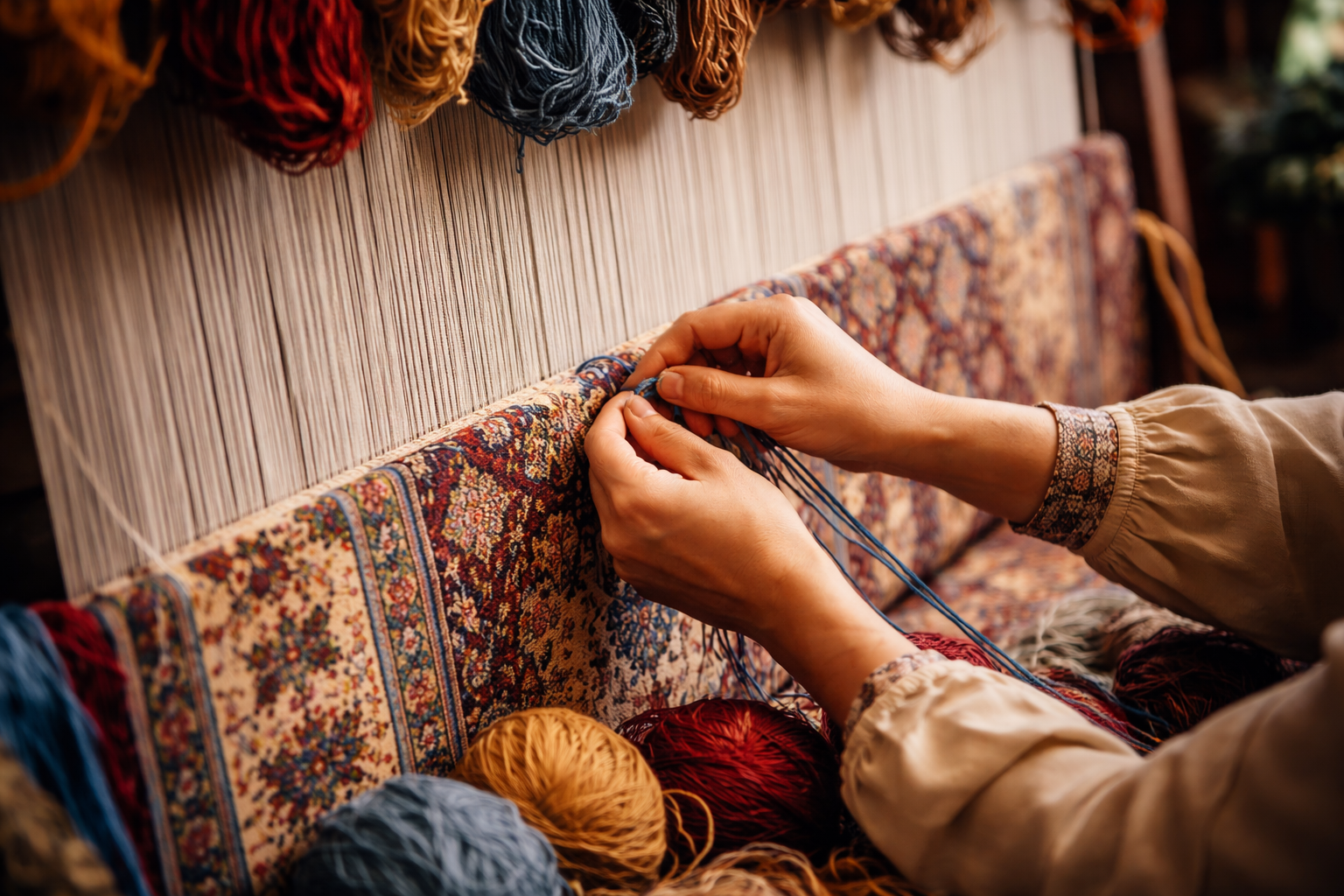
Most of the damage that happens to Persian carpets comes not from dramatic accidents but from slow, daily neglect. Dust and fine grit settle deep into the pile and act like sandpaper against the fibres every time someone walks across the carpet. The fix is simple and takes minutes a week.
Vacuum once a week — gently
Use a low-suction setting with a soft-brush attachment. Always vacuum in the direction of the pile, never against it. Never run the beater bar over the carpet — it can break fibres. For fringes, use the hose attachment held by hand, never the roller head directly.
Vacuum the back side too
For rugs in good condition, occasionally flip and vacuum the underside — this loosens embedded dirt from the fibres far more effectively than vacuuming the front alone.
Air it out twice a year
Hang the carpet outside (not in direct strong sunlight) for a few hours. This releases trapped moisture, dust, and odours that vacuuming cannot reach. Lightly beat the back with a rug beater to dislodge deep debris.
Use a quality underlay
A breathable rug pad underneath protects the underside fibres from friction with hard flooring, prevents the carpet from slipping, and improves airflow — which helps prevent moisture and mould from forming underneath.
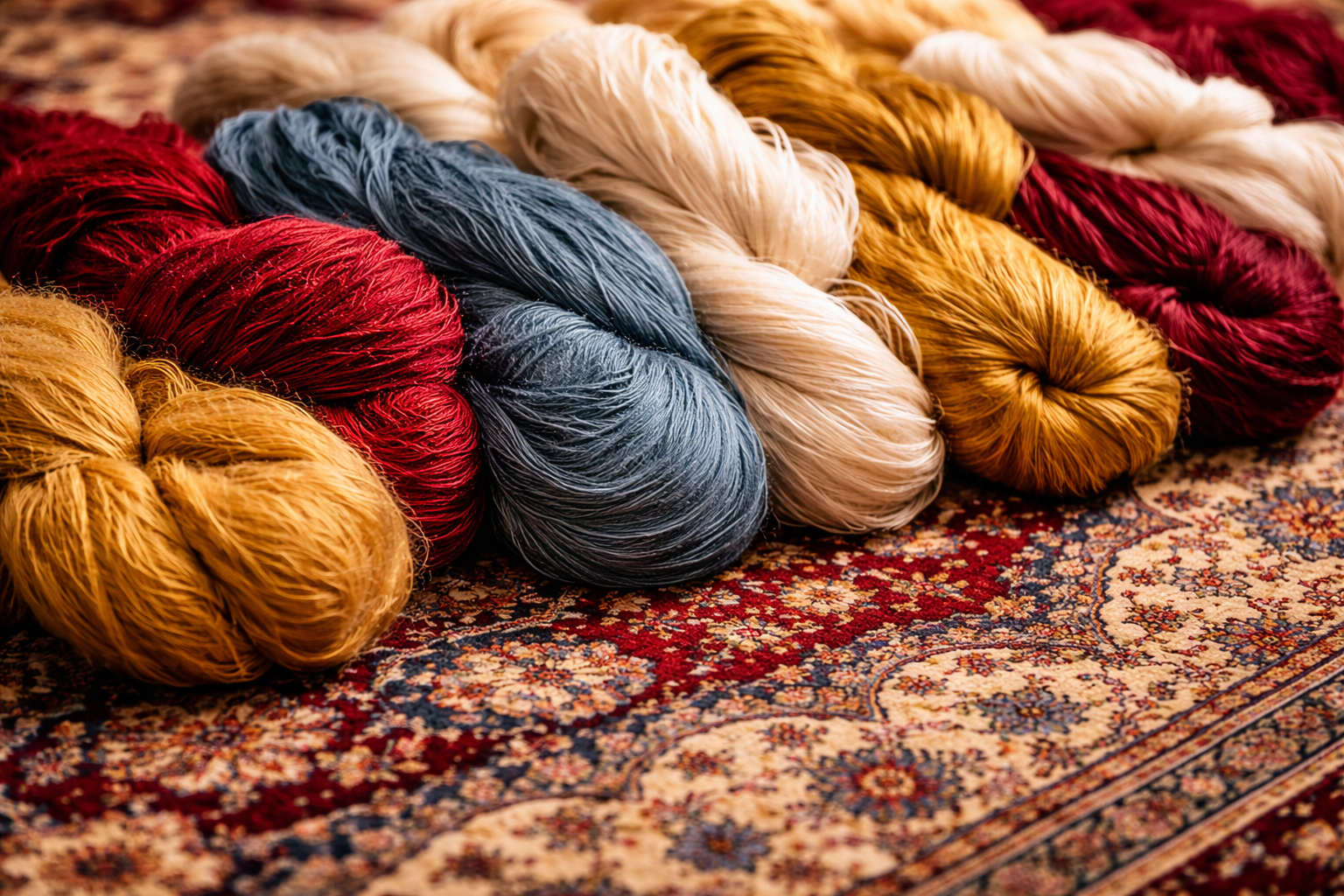
The single most important rule for spills: speed. The faster you act, the less likely the stain is to set. Persian carpet wool is naturally rich in lanolin — a waxy protective layer — which repels liquids for a short window. That window is your opportunity.
"Never scrub a spill. Scrubbing forces the liquid deeper into the fibres and spreads the stain. Always blot — from the edges inward toward the centre."
Blot immediately
Place a clean dry white cloth or towel over the spill. Press firmly with your foot or palm to absorb as much liquid as possible. Work from the outside edges toward the centre — never outward, which spreads the stain.
Use mild soap and cool water
Mix a few drops of mild dish soap or wool-safe hair shampoo (wool fibres are similar to human hair) with cool water. Dip a clean white cloth, wring it out well, and dab the stain gently. Never use hot water — it can cause dyes to run and fibres to shrink.
Rinse and dry thoroughly
Blot away the soapy residue with a cloth dampened with clean water. Then place the damp area on a raised surface — a stool or box underneath — to allow air to circulate from below. A damp carpet left flat can rot the cotton foundation.
Never use: bleach, carpet spray cleaners from supermarkets, steam cleaners, or pressure washers. These can cause permanent dye bleeding, fibre breakdown, and colour loss. If home treatment doesn't fully work, stop and call a professional before making it worse.
Even with perfect weekly maintenance, a Persian carpet needs a thorough deep clean periodically to remove the accumulated grit, oils, and allergens that no vacuum can reach.
| Carpet type | Home cleaning | Professional cleaning |
|---|---|---|
| Wool (hand-knotted) | Gentle home wash possible | Every 2–3 years recommended |
| Silk | Never — always professional | Required every 2–3 years |
| Wool/silk blend | Not recommended | Every 2–3 years |
| High-traffic wool rug | Spot cleaning only | Annually or every 18 months |
| Antique / heirloom | Never attempt at home | Specialist only |
For wool carpets you choose to clean at home: vacuum both sides first, then apply a wool-safe shampoo foam sparingly with a soft sponge, working in small sections. Rinse minimally with clean cool water and blot thoroughly. Dry flat in a shaded, well-ventilated area — never in direct strong sunlight and never in a tumble dryer.
Silk rugs are never wet-cleaned at home. Silk fibres are extremely delicate — moisture causes irreversible damage to both the fibres and the natural dyes. Always take silk pieces to a specialist.
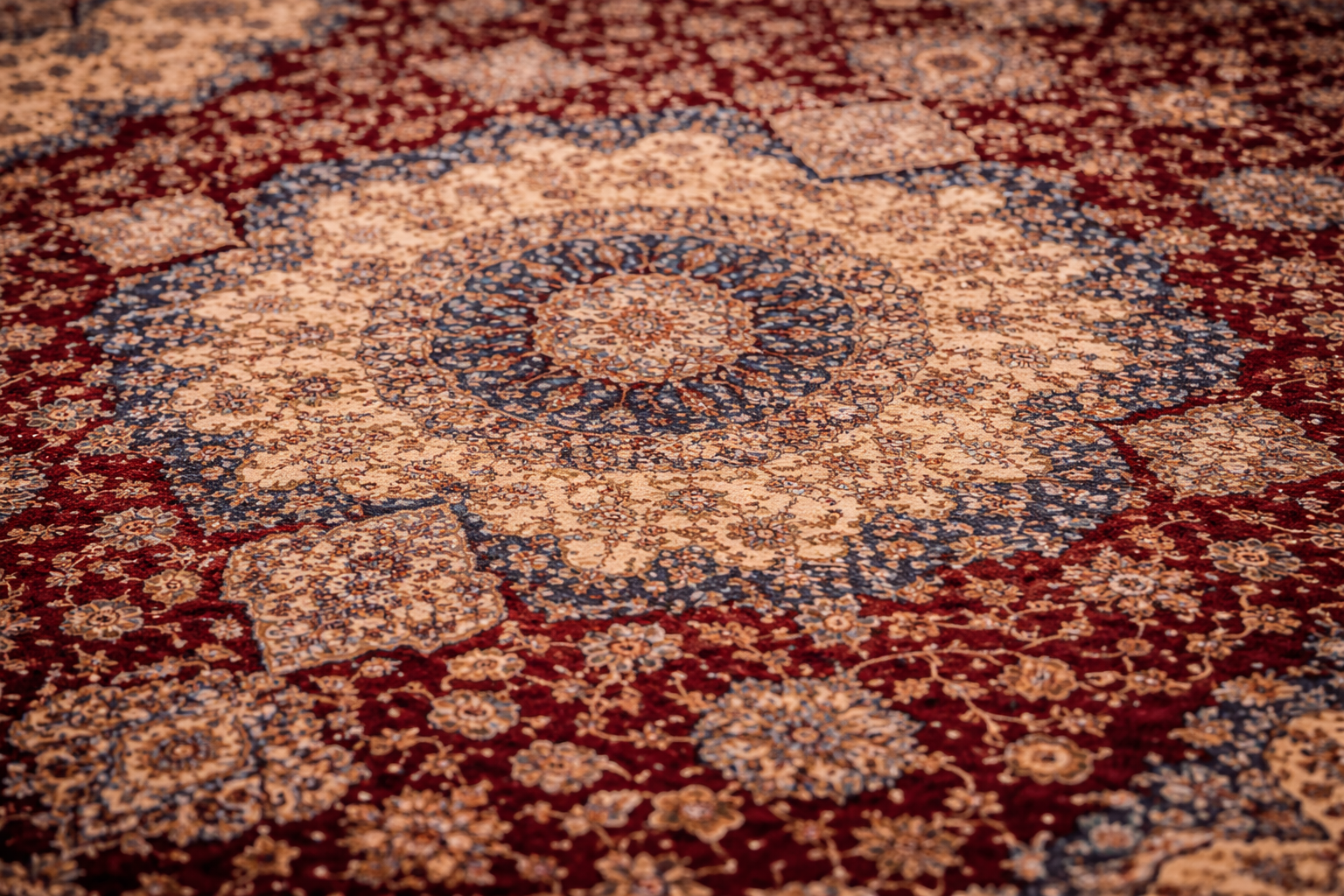
Whether renovating, moving, or simply rotating carpets seasonally, proper storage is critical. A poorly stored carpet can be destroyed by moisture, moths, or creases in a matter of months.
Clean before storing
Always have the carpet professionally cleaned before putting it into storage. Dirt, oils, and food residues attract moths and encourage mould. A clean carpet is far safer in storage than a dirty one.
Roll — never fold
Always roll your carpet — never fold it. Folding creates hard creases in the foundation that are very difficult to remove. Roll with the pile facing inward (pile-side in), starting from one end, rolling along the direction of the pile.
Wrap in breathable material
Wrap the rolled carpet in breathable cotton muslin, acid-free paper, or Tyvek wrap. Never use plastic — it traps moisture and creates ideal conditions for mould and mildew. Seal all seams with tape to keep insects out.
Store elevated in a cool, dry place
Keep the rolled carpet off the floor on a shelf or pallet to prevent moisture from seeping up from below. Choose a cool, dry, dark location — avoid attics (too hot) and basements (too damp). Check every few months for signs of insects or moisture.
Moth prevention
Moths are most attracted to carpets that are dirty and undisturbed. Cedar chips or a cedar-lined storage space work well for short-term protection. Avoid commercial moth-proofing sprays, which can damage dyes. The best prevention is simply keeping the carpet clean and checking it regularly.
Two of the most common causes of Persian carpet deterioration have nothing to do with cleaning — they are UV exposure and uneven foot traffic. Both cause irreversible damage that no restoration can fully correct.
| Threat | What it does | How to prevent it |
|---|---|---|
| Direct sunlight | Fades dyes unevenly, weakens fibres | Curtains, blinds or UV window film |
| Heavy foot traffic | Compresses and breaks pile fibres | Rotate carpet 180° every 6–12 months |
| Heavy furniture | Crushes pile permanently | Use furniture cups under legs |
| Damp flooring | Rots cotton foundation from below | Use breathable underlay, check regularly |
Rotating your carpet regularly is one of the most effective and underused care strategies. Because sunlight and foot traffic affect the carpet unevenly depending on where furniture sits and where light falls, rotating 180 degrees every 6 to 12 months distributes the wear and exposure across the whole surface — dramatically extending its life.
Some situations are beyond home care. Attempting to handle these yourself risks permanent, irreversible damage to a piece that may be worth thousands and is impossible to replace.
A professional hand-wash by a specialist who understands Persian carpet construction — using gentle organic shampoos and traditional techniques — will clean far more deeply than anything achievable at home, without putting the carpet at risk. For most hand-knotted wool carpets in regular use, a professional clean every two to three years is the right rhythm.
"A Persian carpet cared for properly does not age — it matures. The colours deepen, the wool softens, and the investment grows."
Looking for your next Persian carpet? We're here to help you choose wisely.








 EN
EN Türkçe