Handicrafts & Art
If you have ever walked into a Persian or Anatolian home and noticed a flat, brightly patterned rug — thinner than a traditional carpet, often with bold geometric designs and no fluffy pile — you have seen a kilim. To most Western buyers, kilims are simply "those colourful flat rugs," but the truth is much richer. A kilim is not a lesser version of a pile carpet. It is an entirely different art form, with its own techniques, symbols, and a history that stretches back nearly 9,000 years.
This guide takes you inside the world of the kilim — what it is, how it differs from a carpet, the symbols woven into every piece, and why kilims have become one of the most sought-after textile pieces in contemporary homes.
A kilim is a flat-woven, pileless rug — meaning it has no raised fluffy surface like a traditional Persian carpet. Its name comes from the Persian word gelim (گلیم), meaning "to spread roughly." In Turkish it is kilim, in Azerbaijani kilim, and across the Caucasus, the Balkans, and Central Asia it carries variants of the same root.
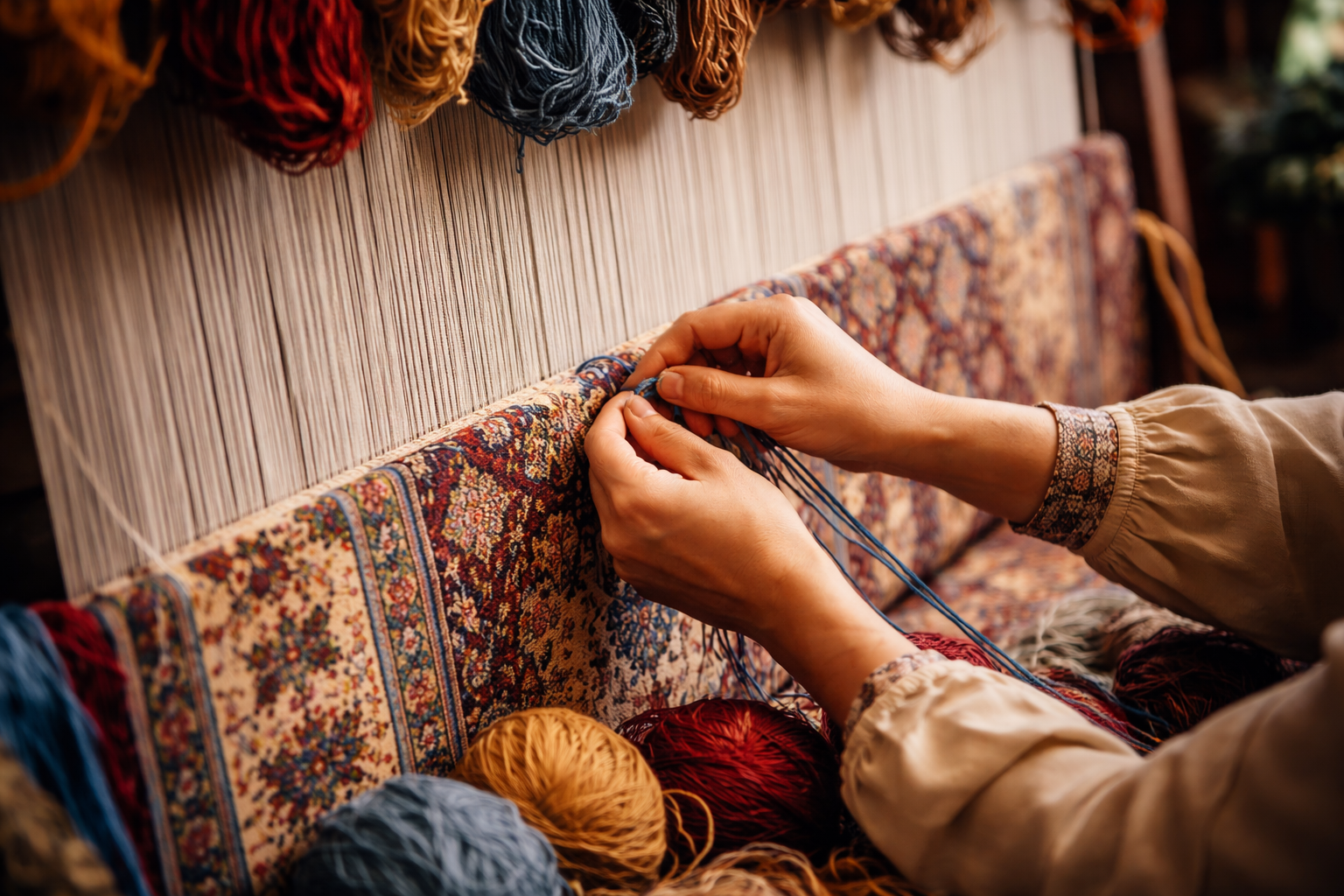
Kilims are made by interweaving coloured warps (vertical threads) and wefts (horizontal threads) so that the pattern is built directly into the structure of the cloth — not knotted onto a base. The result is a thin, strong, reversible textile that shows the same pattern on both sides. The technique is called flatweave, and the most common version is slit tapestry weave, which gives kilims their signature sharp-edged geometric patterns.
"The earliest kilim fragments ever discovered date back to around 7000 B.C. — found at Çatalhöyük in Anatolia. That makes kilim weaving one of the oldest continuously practised textile arts in human history."
Unlike pile carpets, where each tiny knot is tied by hand around a vertical warp, kilim weaving builds the pattern directly into the fabric. It is a slower and more disciplined art than it first appears.
Setting up the loom
Vertical warp threads — usually wool or cotton — are stretched tightly on a horizontal or upright loom. The warp determines the size and density of the finished piece.
Weaving the wefts
Coloured weft threads are passed over and under the warp, packed down tightly, and built up row by row. The pattern is created as the weaver changes weft colours according to the design held in memory or sketched out beforehand.
The slit technique
When two colours meet vertically, a small slit appears between them — the technique's name. This gives kilims their distinctive crisp, straight-edged geometric patterns, but it also restricts curved designs.
Finishing
Once the weaving is complete, the warps are tied off at both ends, often forming the decorative fringe. The kilim is cut from the loom — a moment of quiet ceremony for the weaver, who has often spent weeks or months on a single piece.
Traditionally, kilim weaving was — and largely still is — the work of women in nomadic and semi-nomadic tribal communities. The skills were passed mother-to-daughter, and a young woman's kilims often formed part of her dowry. A bride bringing fine kilims into a marriage was bringing real wealth into the household.
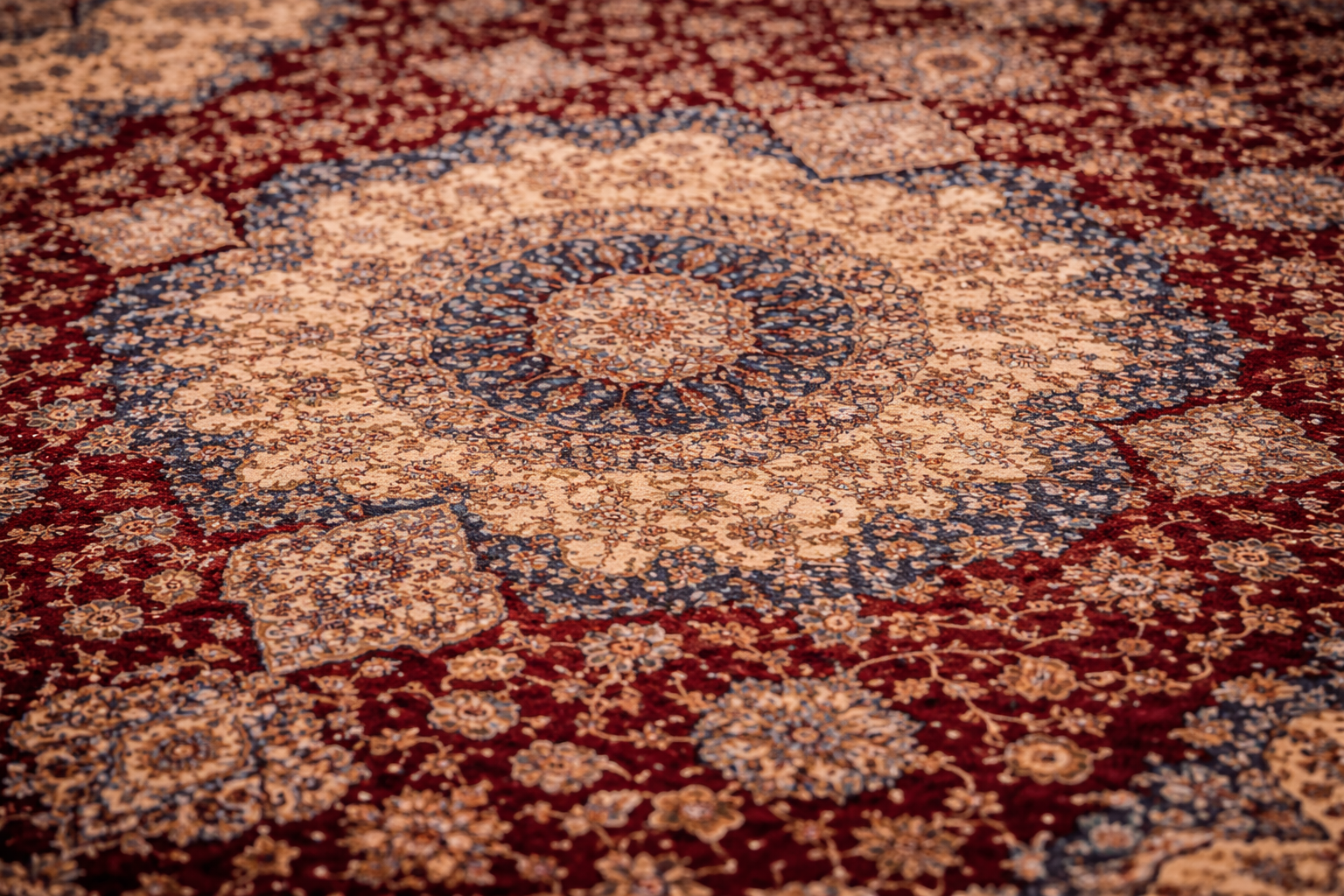
The confusion between kilim and pile carpet is one of the most common in the rug world. They share many roots — both are handmade textiles from the same regions, both carry deep symbolic meaning, both can take months to produce — but they are fundamentally different objects.
| Feature | Kilim (flatweave) | Persian Carpet (pile) |
|---|---|---|
| Construction | Interwoven wefts & warps | Individual knots tied to warp |
| Surface | Flat, no pile | Raised, soft pile |
| Reversibility | Reversible — same on both sides | One-sided |
| Weight & thickness | Thin, light, easy to fold | Thick, heavy, rolled for storage |
| Pattern style | Bold geometric, sharp edges | Curvilinear floral & medallion |
| Production time | Weeks to a few months | Months to years |
| Cultural origin | Tribal & nomadic | Urban workshops & courts |
Neither is "better" than the other — they were made for different purposes and serve different roles. A traditional Persian carpet was the centrepiece of an aristocratic home or place of worship. A kilim was a working textile: floor covering, blanket, prayer rug, saddle bag, wall hanging, and dowry treasure all rolled into one piece of cloth.
Every kilim tells a story. The motifs are not decorative inventions — they are an ancient visual language that tribal weavers used to express desires, fears, blessings, and beliefs. Some symbols are shared across regions; many shift in meaning depending on the weaving tradition. Here are some of the most enduring:
The Evil Eye (Nazar)
Symbolises protection from harm. Diamond-shaped motifs with a central dot, often repeated in borders. Woven into kilims to safeguard the home and the people within it.
Tree of Life
Symbolises immortality and the connection between earth and heaven. Branches reach upward, roots downward — life unfolding across both realms. Common in prayer kilims.
Ram's Horn
Symbolises strength, masculinity, and heroism. Curling spiral motifs often woven near the centre of the kilim. One of the oldest motifs in Anatolian weaving.
Elibelinde (hands on hips)
A stylised female figure with hands on her hips. Symbolises motherhood, fertility, and the sacred feminine. One of the most beloved symbols in Anatolian kilim weaving.
Yin-Yang / interlocking shapes
Symbolises love and the union of opposites. Often woven into dowry kilims as a wish for harmony in marriage.
Hooks & combs
Symbolise protection against the evil eye and good fortune. Small repeated shapes scattered through the field of the kilim, said to "snag" bad energy before it reaches the family.
When you look at a tribal kilim, you are not just looking at a textile. You are reading a woman's hopes, prayers, and protections woven into wool — a quiet act of authorship that has been passed down for thousands of years.
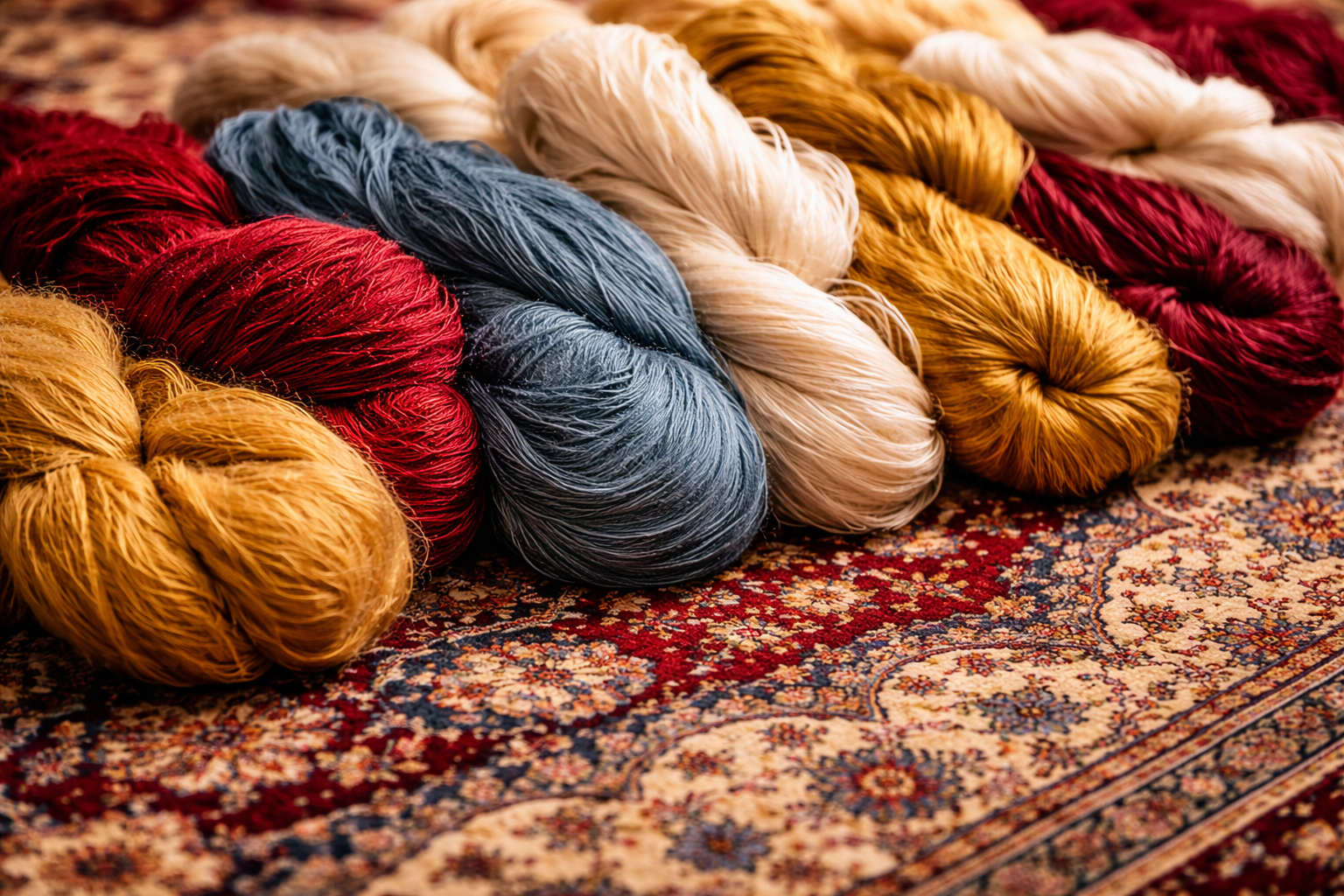
Kilims are woven across a vast region stretching from the Balkans to Central Asia. Each tradition has its own colour palette, motif vocabulary, and weaving technique. Here are the most important styles to know:
Persian (Iranian) kilims
Made primarily by the Qashqai, Shahsavan, and Kurdish tribes of Iran. Known for fine weaves, deep natural-dye colours (madder red, indigo blue, walnut brown), and narrative symbolism drawn from tribal mythology and natural landscapes.
Anatolian (Turkish) kilims
From central and eastern Turkey. Bold colours, large geometric medallions, and the richest symbolic vocabulary — Elibelinde, ram's horn, evil eye, tree of life. The Kayseri region is particularly famous for fine silk kilims used in bridal dowries.
Caucasian kilims
From the mountainous regions between the Black and Caspian seas. Famous for rugged durability, strong contrasting colours, and sharp angular geometry. Often more graphic and modern-looking than their Persian or Turkish cousins.
Afghan & Central Asian kilims
Woven by Turkmen, Baluch, and other tribal groups. Earthier palettes — deep reds, browns, and ivories — and bold stripe-based or panel-based designs. Often heavier and more rustic in feel.
Modern & designer kilims
Contemporary weavers — many still hand-weaving in traditional regions — produce kilims in muted, contemporary palettes and simplified patterns. Hugely popular in modern interiors that want kilim character without traditional intensity.
Kilims are having a quiet renaissance. Interior designers have rediscovered them as the perfect bridge between handmade tradition and contemporary minimalism — exactly what today's homes are reaching for. Their flat, low-profile structure makes them ideal for layering, their bold geometry pairs beautifully with clean modern furniture, and their tribal authenticity gives a curated space the sense of having been collected over time.
As a layered rug
Lay a kilim over a larger neutral base rug (jute, sisal, or a plain wool rug). The kilim becomes a graphic centrepiece while the base softens the room. A favourite move in Scandinavian, bohemian, and modern coastal interiors.
As wall art
A kilim is a textile artwork. Hung on a clean white wall — especially in a hallway or above a sofa — it brings warmth, history, and storytelling that no painting can replicate.
In high-traffic areas
Because they have no pile, kilims are excellent for hallways, kitchens, and entryways — places where a pile carpet would wear quickly. They are flat, durable, and easy to clean.
As a statement piece
A single boldly-coloured kilim in an otherwise neutral room is one of the most striking design moves you can make. It draws the eye, anchors the space, and tells a story about who lives there.
"A kilim is an entire culture compressed into a few square metres of wool. To live with one is to live with a quiet thread back to thousands of years of human creativity."
Discover the quiet beauty of kilims — handwoven, story-rich, and timeless.







 EN
EN Türkçe