
 EN
EN Türkçe


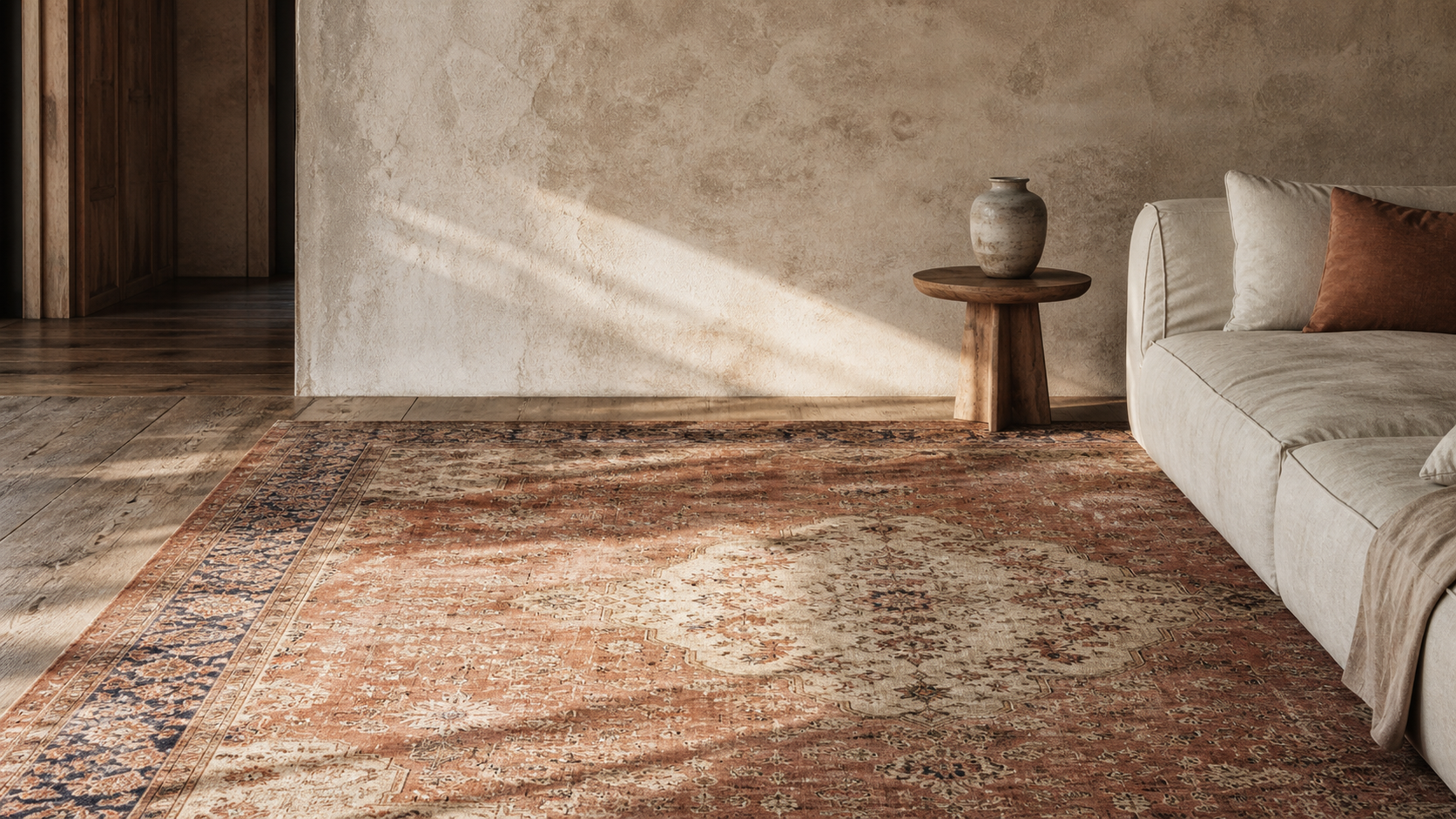
For the last decade, the cool-gray, low-pile, "blends in with the floor" rug has been the safe choice. In 2026, it is the wrong choice.
Walk through any current issue of the major interior design publications and you will notice the same pivot. Homes & Gardens is calling vintage Persian rugs the one antique worth investing in this year. Lynne Greene Interiors is telling clients flatly that gray rugs are over. Nazmiyal is reporting that designers are no longer asking for finishing touches — they are asking for rugs that anchor a room.
This is not a passing color trend. It is a correction to ten years of interiors that read as expensive but feel empty. And the antidote, almost everyone agrees, is the same one Persian weavers have been making for six hundred years.
Here is what is actually happening, why it matters if you are buying in 2026, and how to choose a rug that will still feel right thirty years from now.
The shift: warmth replaces minimalism
The reason gray failed is simple. A room with no pattern, no color depth, and no texture looks photogenic in a real estate listing and lifeless to live in. After enough years of that, people started craving the opposite — rooms that feel gathered, not assembled.
That single word — gathered — explains the whole 2026 mood. Designers are pushing for interiors that look like they evolved over time, picked up piece by piece, with at least one element that has clearly outlived several owners. A vintage Persian rug does that work better than any other object in a room. It tells the eye: someone made this by hand, somewhere far from here, a long time ago.
The earth-tone palette dominating 2026 — terracotta, rust, sage, warm taupe, dusty rose, deep navy — is not just a color preference. It is a permission slip to use rugs that were already this color when they were woven sixty years ago.
What designers are actually putting on the floor
The consensus across the trade press for 2026 is remarkably specific.
- Distressed or washed antique pieces — slightly faded, with visible patina from decades of use.
- Higher knot densities — designs sharp enough to read like paintings on the floor.
- Muted versions of traditional reds and blues — dusty rose instead of crimson, slate over royal navy.
- Oversized rugs that sit fully under the furniture, not floating in the center of a room.
- Tonal Persian pieces that ground a room without dominating it.
Notice what is missing from that list: anything new, machine-made, or designed to "match." The whole point is contrast — a rug with history sitting under furniture without any.
The four vintage Persian styles that fit 2026 best
Not every Persian rug fits the current mood. These four do.
Tabriz — the fine-knotted classic
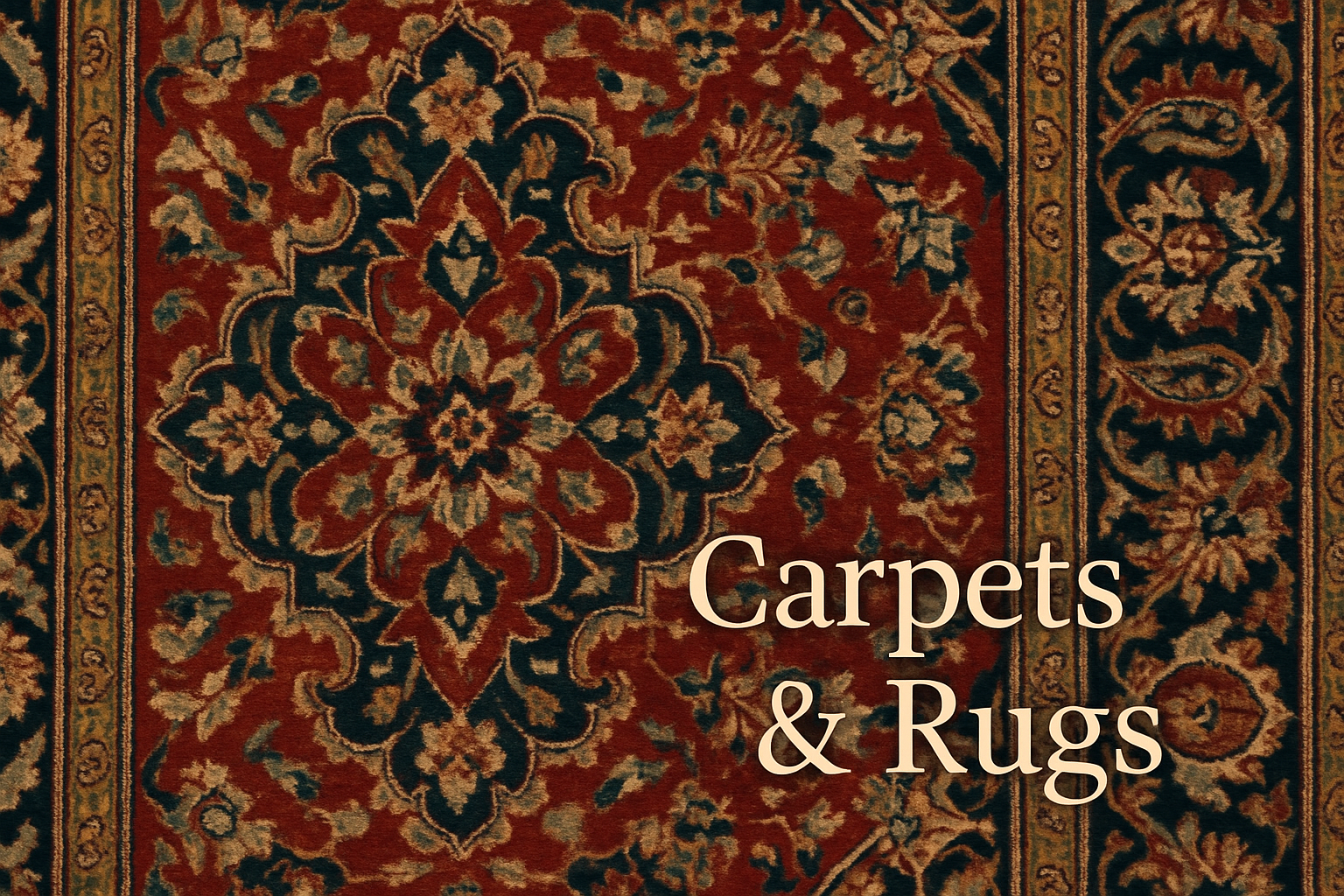
Tabriz rugs are known for very high knot density and detailed central medallions. The fine weave means motifs read clearly even in a busy room — exactly what minimalists who are tired of minimalism want. Look for older Tabriz pieces with softened reds and ivory fields. The muted palette every 2026 design editor keeps recommending is the one Tabriz rugs age into naturally.
Heriz — the grounded geometric
Heriz rugs read bolder and more geometric. Heavier wool, larger motifs, and a presence that fills a room without needing a complicated pattern to do it. A distressed Heriz in rust and terracotta is essentially the platonic ideal of the 2026 trend — earthy, textural, slightly imperfect, immediately warming.
Sarouk — the warm-red anchor
Sarouk rugs are the warm-red, intricately floral pieces most people picture when they hear "Persian rug." Vintage Sarouks have aged beautifully — the reds soften into dusty rose and brick, the ivory fields take on cream — which is precisely the palette every interior designer is asking for right now.
Kashan — the investment-grade choice
Kashan rugs sit at the top of the durability and collectibility scale. Dense wool, deep reds, ivory fields, fine workmanship. They are the rug you buy once and pass to the next generation. If your budget allows for one rug that will hold value over decades, this is the one to choose.
The earth-tone palette, decoded
If a trend report tells you to buy a "terracotta rug" and you are not sure what that means in Persian terms, here is the translation.
The trick is that you do not dye a vintage rug to match a 2026 palette — you find a rug that has already aged into it. That is the difference between something that looks current for two years and something that will still look right when the trend cycle has long moved on.
Distressed or fully restored — which one to buy
This is the question that confuses most first-time buyers. The honest answer is: both are correct. The mistake is buying the wrong one for your room.
Buy distressed if —
Your room is modern, open-plan, or layered, and you want the rug to look like it has always belonged there. Low pile, softened colors, slight imperfections. This is the dominant 2026 aesthetic and the safer bet for contemporary interiors.
Buy fully restored if —
The rug is going into a more formal room, a dining room with traffic, a bedroom where you want the colors saturated, or you are buying it primarily as an investment piece. Restoration done with matched wool and traditional methods preserves resale value.
Why prices are moving
Three things are happening at once.
Supply is finite. Genuine hand-knotted antique Persian rugs are not being made faster. The weaving traditions, the natural dyes, the regional knot patterns — these were developed over generations within specific families and villages. They cannot be replicated at scale, and many of those weaving lineages no longer exist.
Demand is accelerating. With every major design publication naming vintage Persian as the trend of the year, the trade-side demand from interior designers, architects, and collectors has visibly tightened the market in the last twelve months.
The dollar value of authenticity is being repriced. As mass-produced "Persian-style" rugs flood the market, the premium on a real one — properly authenticated, with provenance — keeps climbing.
A 60-second authenticity check before you buy anything
Use this whether you are shopping with us, or with anyone else.
-
Flip it over.
On a hand-knotted rug, the pattern is clearly visible from the back. On a machine-made rug, the back looks like a printed grid.
-
Check the fringe.
Real fringe is an extension of the warp threads — part of the rug itself. Glued or sewn-on fringe is an immediate disqualifier.
-
Look at the knots.
Hand-tied knots are slightly irregular. Perfectly uniform knots mean a machine. Loupe and a steady hand reveal everything.
-
Find the imperfection.
Hand-woven rugs have small asymmetries — a motif slightly off, a border that does not perfectly mirror. That is the signature of a human hand. Flawless symmetry is a red flag.
-
Look for abrash.
Slight horizontal color variation across the field — caused by different dye batches in natural-dye weaving — is a sign of authenticity, not a defect. Collectors actively prize it.
If a rug passes all five, you are looking at the real thing.