Interior Inspiration · 2026
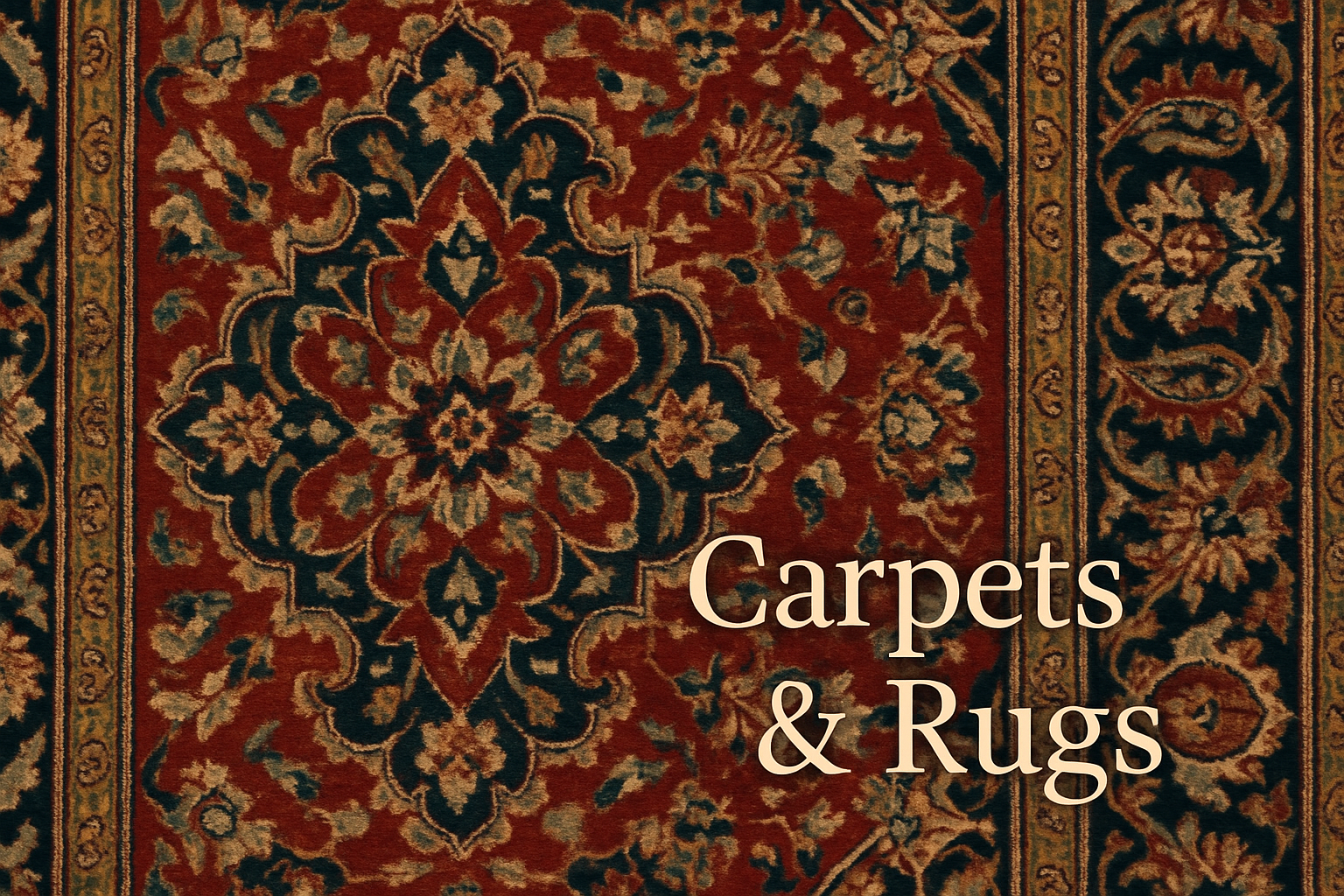
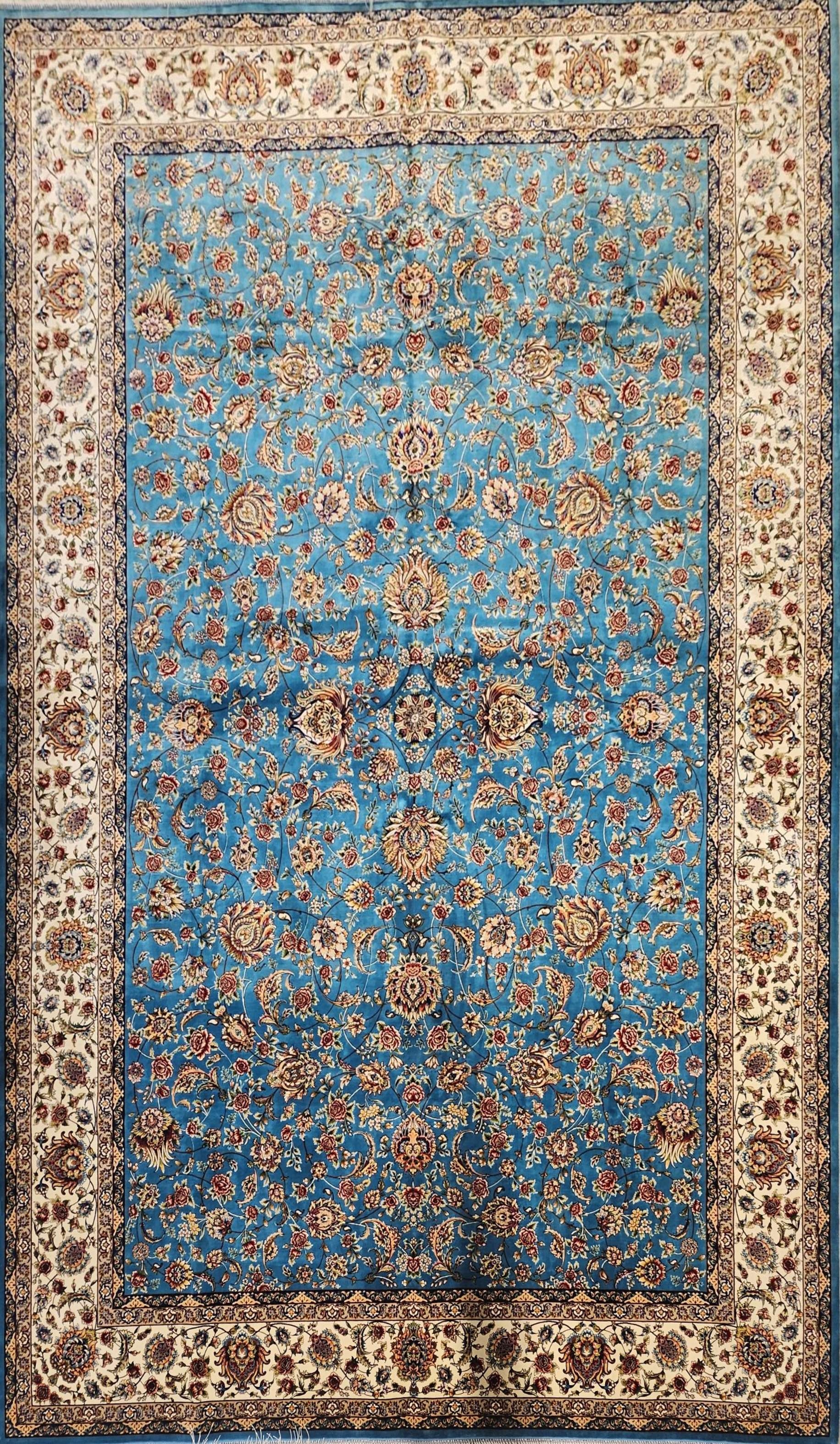
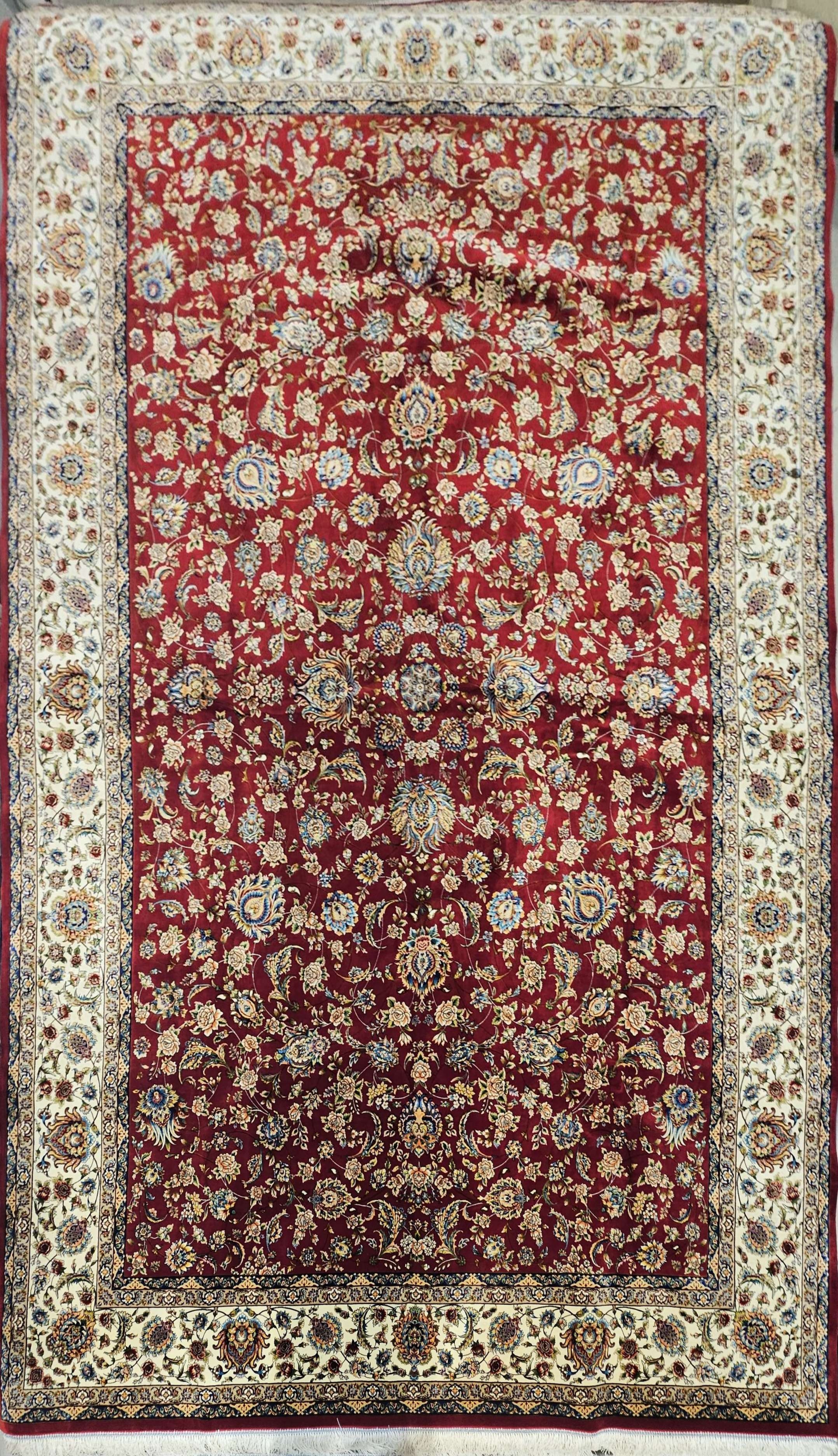
For decades, Persian carpets were stuck in a stereotype — "grandmother's living room," dark wood, heavy curtains, and matching everything. In 2026 that picture has flipped. The biggest interior design movement of the year is exactly what designers call "narrative layering": pairing handmade traditional pieces with clean modern forms. The Persian carpet — once seen as too ornate for minimalist spaces — has become the most desired anchor piece in contemporary homes.
This guide shows you exactly how to do it. Whether you live in a minimalist apartment, a Japandi-inspired loft, or a mid-century modern home, a Persian carpet doesn't just fit — it transforms the space. Here's how to make it work.
According to leading interior design publications, 2026 has officially closed the chapter on showroom-perfect, all-matching rooms. The mood has shifted to "collected over time" — spaces that look gathered, evolved, and shaped, not bought all at once. And nothing achieves that look faster than a hand-knotted Persian carpet.
2026 Trend
Narrative Layering
Designers are deliberately pairing vintage heirlooms with contemporary forms to build "story" into a room. A clean modern sofa next to a richly patterned Persian carpet creates instant visual tension — and a sense that the room has personality and history.
2026 Trend
Warm Maximalism
Cool greys and sterile minimalism are out. Warm neutrals — sand, ochre, terracotta, deep burgundy — are dominating interiors. These are exactly the colours that have anchored Persian carpets for 500 years.
2026 Trend
Craft Over Mass Production
Buyers are turning away from disposable, mass-produced decor. The hand-knotted Persian carpet — produced over months by a single artisan — is the ultimate statement piece for the "fewer but better things" generation.
2026 Trend
Pattern Drenching
Mixing prints across textiles, walls, and flooring is the year's signature move — done with cohesion, not chaos. Designers say to anchor the room with one bold pattern, and a Persian carpet is the perfect anchor.
Scandinavian Minimalism
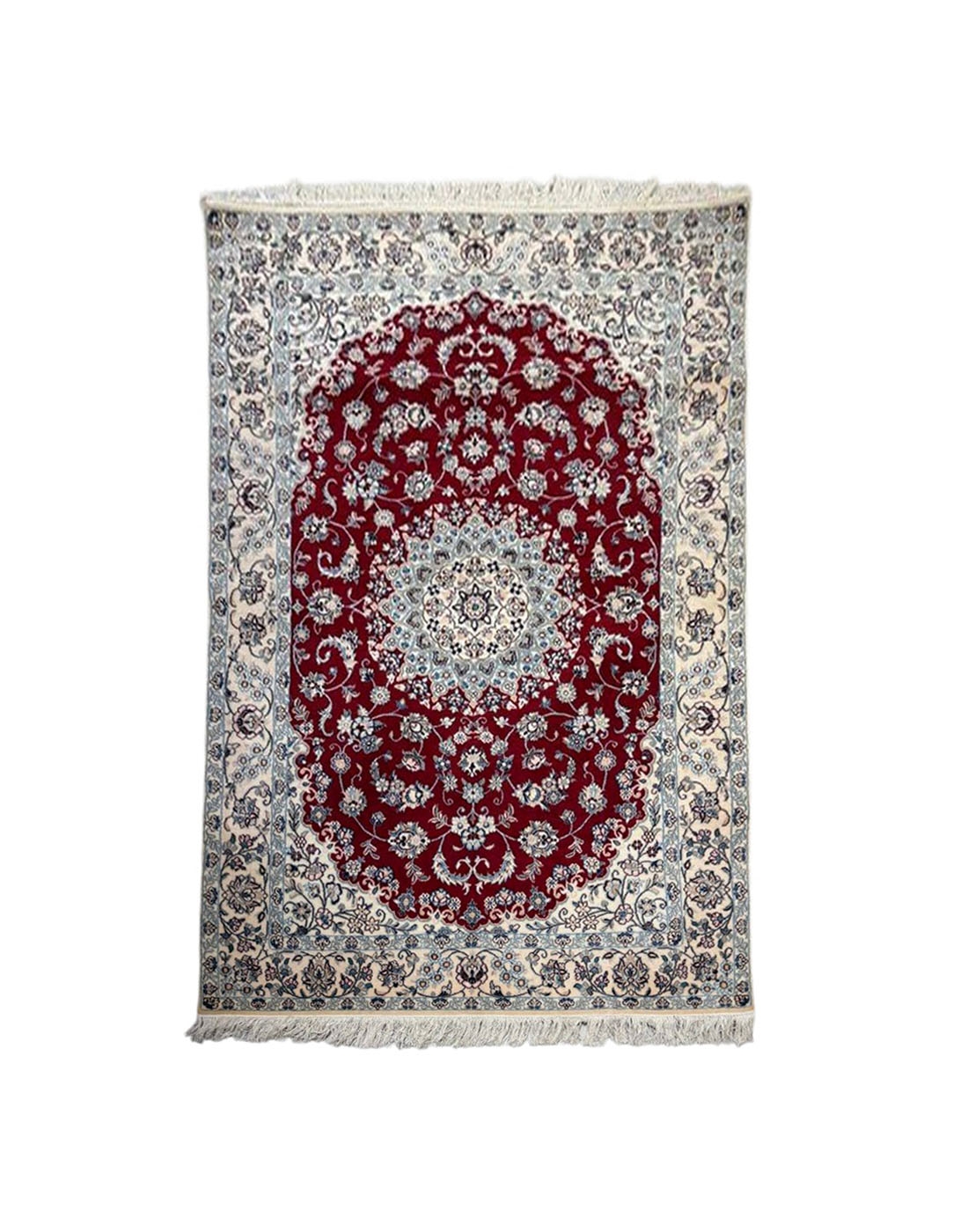
Pair a low-contrast, tonal Persian carpet (think soft beiges, dusty rose, pale gold) with pale oak furniture, white walls, and one or two statement pieces. The carpet becomes the warm focal point in an otherwise restrained palette. Choose Tabriz or Nain pieces with cream backgrounds.
Japandi Maximalism
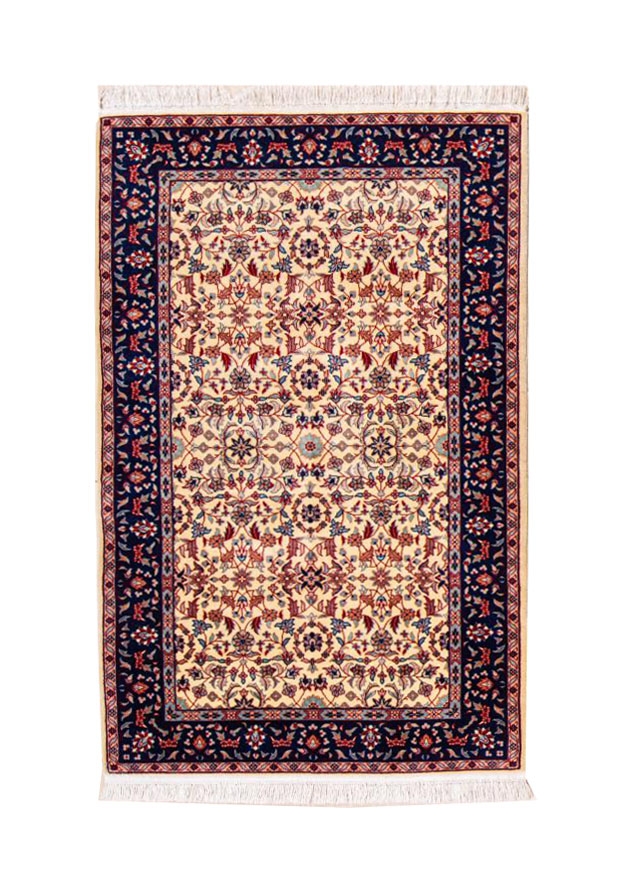
The newer, richer version of Japandi blends Japanese restraint with deeper tones and layered textures. A medium-toned Persian carpet — warm rust, indigo, sage — pairs beautifully with low platform sofas, raw wood, paper lanterns, and ceramics. Less is still more, but warmer.
Mid-Century Modern
Walnut, brass, geometric forms, tapered legs. A medallion Persian (Kashan or Isfahan) under a low-slung mid-century sofa is a classic combination — the carpet's curves softening the architectural lines of the furniture. This pairing has actually never gone out of style.
Contemporary Industrial
Exposed brick, concrete, steel, large windows. A bold, deeply coloured Persian carpet (rich red, dark navy, forest green) provides the warmth and softness an industrial space desperately needs. The contrast is the whole point.
Quiet Luxury
Linen, boucle, brass, plaster walls, restrained palette. A silk Persian — Qom or fine Isfahan — is the move here. The sheen of silk against matte modern textiles creates the signature "quiet luxury" feel without anything appearing showy.
The biggest mistake people make is trying to match their carpet to their sofa. Don't. Instead, pull one secondary colour from the carpet and echo it elsewhere in the room — in throw pillows, art, ceramics, or even a lampshade. This is what makes the room feel composed, not coordinated.
| Modern palette | Carpet that works | Why it works |
|---|---|---|
| Beige & cream | Tonal Tabriz or Nain | Adds warmth without disrupting the calm |
| White & black | Deep red Kashan or navy Isfahan | The contrast becomes the focal point |
| Warm woods & brass | Rust, gold, or terracotta tones | Echoes the metal tones beautifully |
| Soft sage or olive | Ivory carpet with green accents | Subtle conversation between the two greens |
| Deep moody tones | Antique-style faded Persian | Patina against richness reads as expensive |
"The strongest interiors of 2026 don't look like they were assembled in one afternoon. A Persian carpet is the single fastest way to make a new room feel like it has been lived in for generations."
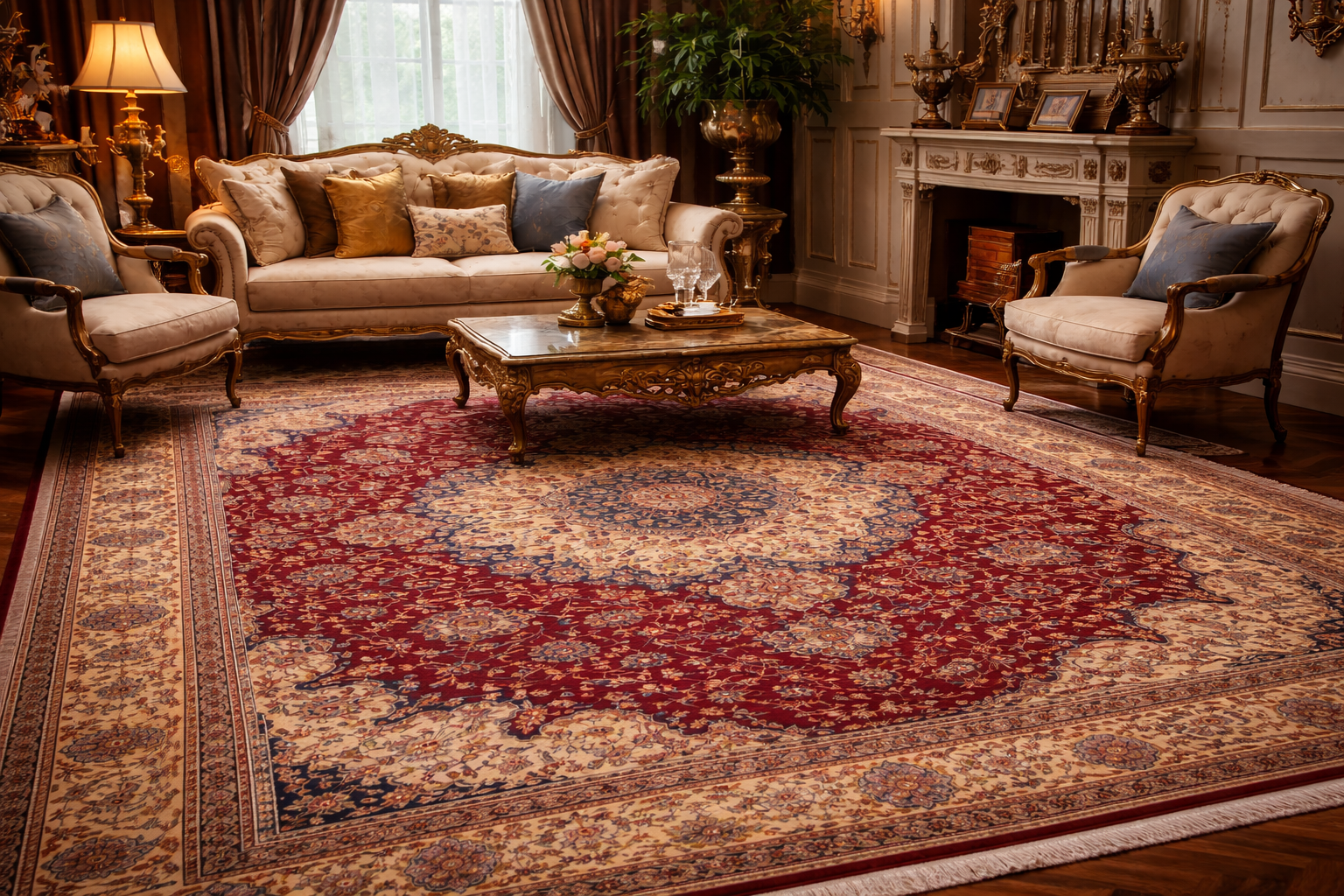
A common mistake is buying a carpet that's too small for the room. A small carpet floating in an open space makes everything feel disconnected. The right size anchors the furniture and defines the zone.
Living room
The front legs of the sofa and accent chairs should always sit on the carpet — never floating off it. For larger spaces, get all four legs on. The carpet should extend at least 30–60 cm beyond the sofa on each side. Don't shrink the carpet to fit the coffee table; expand to fit the seating arrangement.
Dining room
The carpet should extend at least 60 cm beyond the chairs on all sides — so when guests pull their chair back, they don't catch on the edge. Round tables call for round carpets. Rectangular tables look best on rectangular carpets that echo their shape.
Bedroom
Two options: a large carpet under the bottom two-thirds of the bed (extending out past the foot and sides), or two smaller runner-style carpets on each side of the bed. Avoid placing the entire bed on a small carpet — it looks awkward.
Open-plan spaces
Use a carpet to define a zone. A large Persian under your living area visually separates it from the kitchen or dining space — even if there's no wall between them. This is "micro-zoning" and it's one of the most useful design moves of 2026.
Choose the carpet first, then build the room around it. The carpet sets the tone for everything else.
Coordinated rooms look dated. Aim for echo, not match — pull one accent colour, not the whole palette.
Pair the carpet's intricate pattern with one or two other patterns of different scale — striped pillows, geometric art.
Patterns of similar size and density compete. Vary the scale: large pattern + small pattern + solid.
Linen sofas, sheer curtains, light wood — these let the carpet take centre stage without fighting it.
Big carved wood and dark velvet next to a Persian carpet read as dated. Modern lines let the carpet shine.
Faded, slightly worn vintage Persians are exactly what 2026 wants. They look more real than anything new.
Slight irregularities, soft fading, and visible age are now considered the most desirable qualities a carpet can have.
Mistake 01
Going too small
A small carpet under a coffee table with floating furniture around it looks disconnected. The carpet should be big enough that at least the front legs of every seat sit on it. When in doubt, go up one size.
Mistake 02
Treating it like a museum piece
Persian carpets are made to be used. Put furniture on them, walk on them, live with them. Treating one as too precious to enjoy defeats the entire purpose of buying it.
Mistake 03
Overdoing the "Eastern" theme
A single Persian carpet anchors a modern room. Three Persian carpets, brass lanterns, ornate cushions, and dark wood furniture make it a themed restaurant. Restraint is the move.
Mistake 04
Buying without checking quality
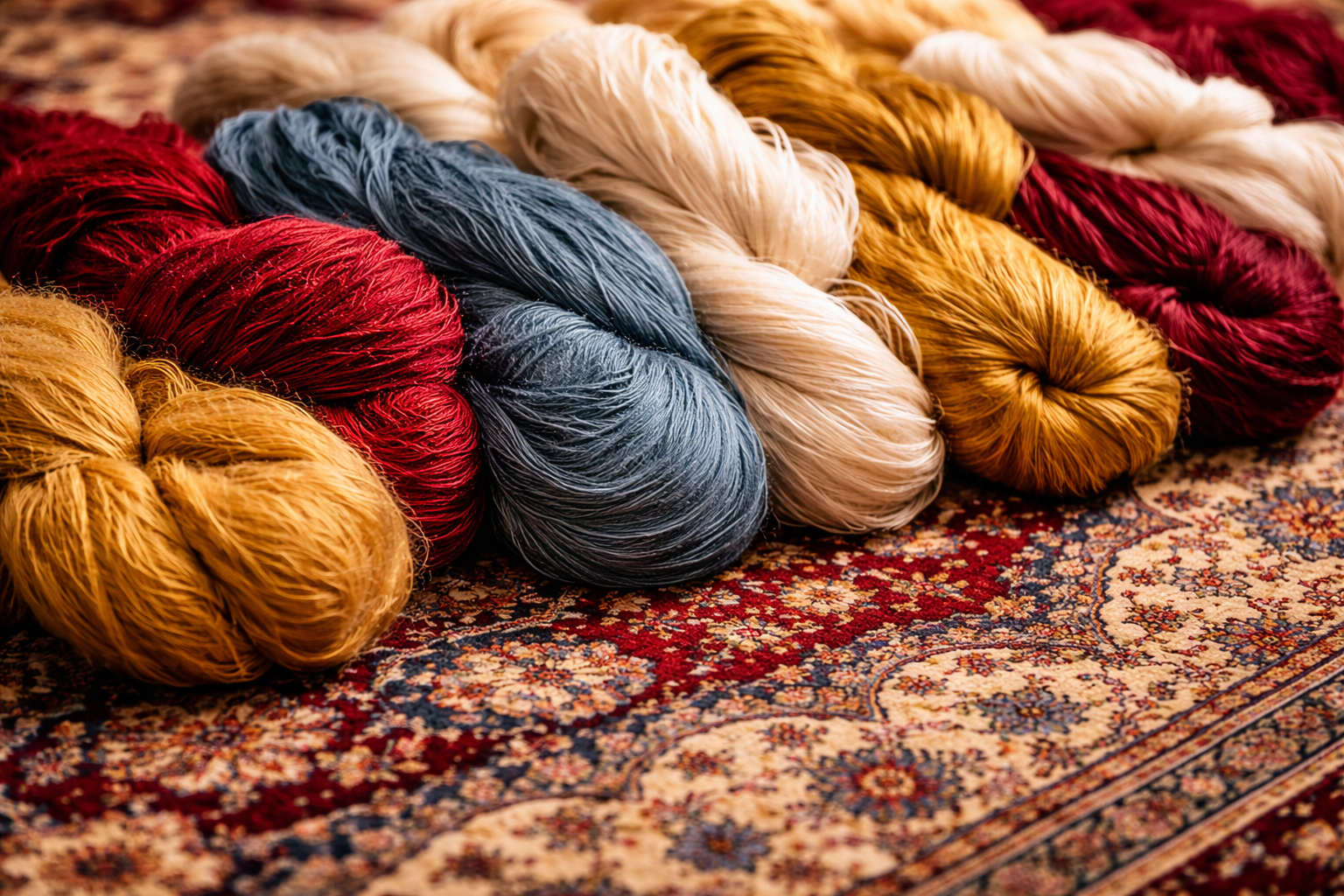
A real hand-knotted carpet will last 100+ years and look better with age. A cheap imitation looks tired in 5. If you're investing in a centrepiece, invest in something genuine.
Make your modern home unforgettable — anchor it with a Persian carpet.








 EN
EN Türkçe